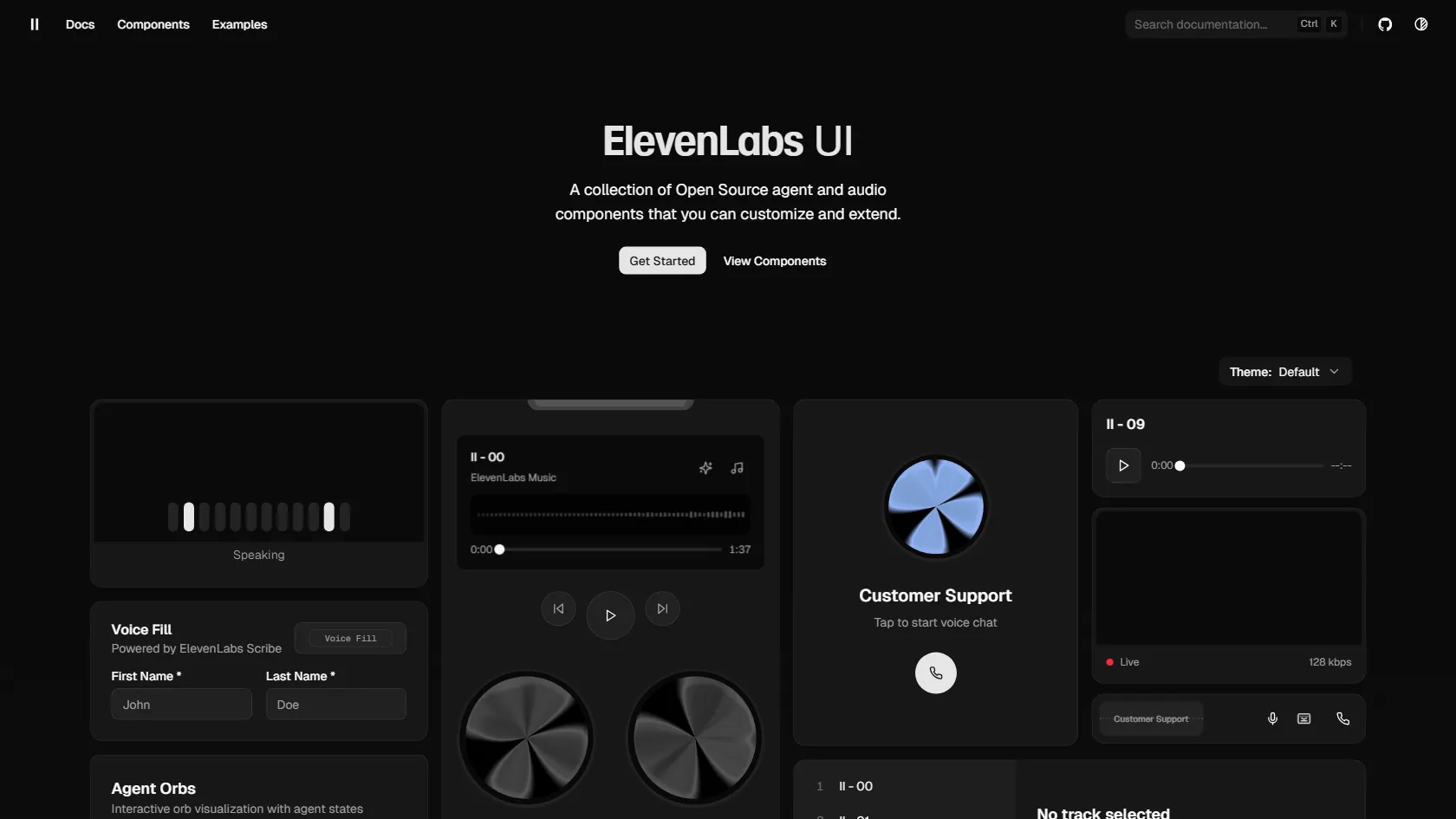
ElevenLabs UI is an open-source collection of customizable audio and agent components for developers. It provides ready-to-use building blocks for creating voice interfaces, including real-time audio visualization, interactive agent states, and voice chat capabilities. The toolkit integrates seamlessly with ElevenLabs services to deliver high-quality voice synthesis and natural conversations.
Free
How to use ElevenLabs UI?
ElevenLabs UI helps developers build voice-enabled applications quickly by providing pre-built components. You can integrate these components into your projects to add features like real-time audio visualization, voice chat interfaces, and interactive agent states. It solves problems related to complex voice interface development by offering customizable, open-source tools that work with ElevenLabs' audio services. This allows for faster deployment of voice applications in customer support, entertainment, and interactive media.
ElevenLabs UI 's Core Features
Real-time audio waveform visualization with smooth scrolling animations for dynamic audio feedback.
Interactive agent orbs that visually represent different agent states like idle, listening, and talking.
Voice chat components with built-in message input and voice button controls for seamless conversations.
Customizable audio players with play/pause controls and track selection for media applications.
Open-source design system based on shadcn/ui, allowing full customization and extension of components.
Integration with ElevenLabs Scribe for voice fill capabilities, enhancing voice input and output features.
Theme support with light and dark mode options to match application design preferences.
ElevenLabs UI 's Use Cases
Developers creating customer support chatbots can use the voice chat components to build interactive, voice-enabled help desks that handle queries efficiently.
App builders in the entertainment industry integrate audio players and waveforms to develop music or podcast apps with real-time visual feedback.
Startups building AI agents utilize agent orbs and state management to visualize agent interactions in educational or gaming applications.
E-commerce platforms implement voice fill and chat interfaces to assist customers with order tracking and address changes, improving user experience.
Content creators use the customizable components to add voice narration features to their websites or apps, enhancing accessibility and engagement.
Tech teams prototyping voice interfaces leverage the open-source nature to quickly test and deploy components without starting from scratch.